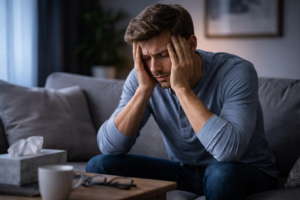

We’ve all said it at some point: “I’m just tired.” Busy schedules. Long workdays. Family responsibilities. Late-night scrolling. Modern life makes exhaustion feel normal.
But here’s the real question: What if it’s not?
At SONNO Sleep Center, one of the most common concerns we hear about is excessive daytime sleepiness — and many people live with it for years assuming it’s just part of adulthood.
Let’s talk about when “I’m tired” might actually mean something more.
Tired vs. Sleepy: There’s a Difference
Being tired can mean you’re physically or mentally drained. You might feel low energy, unmotivated, or sluggish.
Sleepiness, however, is different.
It’s that heavy-lidded, can’t-keep-your-eyes-open feeling. The kind that makes you:
- Drift off during meetings
- Struggle to stay alert while driving
- Feel foggy even after coffee
- Catch yourself nodding off on the couch at 3 PM
If you’re consistently falling asleep during the day, your body may be signaling that nighttime rest isn’t doing its job.
And that’s not something to ignore.
When Sleepiness Is Not Normal
We live in a culture that glorifies being busy. So when someone says they’re exhausted, the typical response is, “Same.”
But there’s a difference between occasional tiredness and something persistent.
So how do you know when sleepiness is not normal?
Here are a few red flags:
- You sleep 7–9 hours but still wake up unrefreshed
- You rely heavily on caffeine just to function
- You feel sleepy in passive situations (watching TV, reading, sitting quietly)
- You’ve had near-miss accidents due to fatigue
- Others notice you doze off easily
If this sounds familiar, your body may not be completing healthy sleep cycles — even if you think you’re getting “enough” hours.
Common Daytime Drowsiness Causes
Many factors can contribute to persistent fatigue. Some are lifestyle-related. Others are medical.
Let’s look at common daytime drowsiness causes:
1. Poor Sleep Quality
You may be spending enough time in bed but not reaching deep, restorative stages of sleep.
2. Obstructive Sleep Apnea
Breathing interruptions during the night fragment sleep repeatedly — often without the person realizing it.
3. Insomnia
Difficulty falling or staying asleep can reduce restorative rest over time.
4. Restless Legs Syndrome
Uncomfortable leg sensations may disrupt sleep cycles.
5. Narcolepsy
A neurological condition that affects the brain’s ability to regulate sleep-wake cycles.
6. Circadian Rhythm Disorders
Shift work, irregular sleep schedules, or delayed sleep phase can interfere with natural rhythms.
In many cases, sleep disorders and fatigue go hand in hand — and identifying the root cause makes all the difference.
Why Ignoring It Can Be Risky
Daytime sleepiness isn’t just inconvenient.
It can impact:
- Job performance
- Academic focus
- Mood regulation
- Reaction time
- Driving safety
Studies consistently show that chronic sleep disruption increases risks for cardiovascular disease, metabolic issues, and mental health challenges.
When your brain doesn’t get proper restorative sleep, everything slows down — thinking, memory, reaction time, emotional regulation.
That’s why persistent symptoms deserve attention.
“But I Thought This Was Just Stress…”
Stress absolutely affects sleep.
But here’s something important: even stress-related sleep disruption can evolve into a diagnosable condition if left untreated.
If you’ve tried:
- Going to bed earlier
- Limiting screen time
- Reducing caffeine
- Practicing relaxation techniques
…and you still feel overwhelmingly sleepy during the day, it may be time to look deeper.
You don’t have to push through it.
How a Sleep Evaluation Can Help
At SONNO Sleep Center, the goal isn’t to label you — it’s to understand what your body is doing during the night.
A comprehensive evaluation may include:
- Detailed sleep history
- Assessment of symptoms and lifestyle factors
- Diagnostic sleep testing if indicated
- Personalized treatment planning
Seeing a sleep specialist for fatigue allows you to move from guessing to knowing.
And that clarity is powerful.
Treatment Changes Everything
Here’s what many patients say after proper diagnosis and treatment:
“I didn’t realize how bad I felt until I started feeling better.”
Because when sleep improves:
- Energy becomes steady instead of spiking and crashing
- Mornings feel manageable
- Focus sharpens
- Mood stabilizes
- Motivation returns
Restorative sleep isn’t a luxury. It’s a biological necessity.
Questions to Ask Yourself
If you’re unsure whether your sleepiness is something to investigate, reflect on this:
- Do I feel alert without caffeine?
- Can I sit quietly without dozing off?
- Do I wake up feeling refreshed?
- Has this been happening for more than three months?
- Is my fatigue affecting my daily responsibilities?
If several answers raise concern, you don’t need to wait for it to get worse.
You Deserve to Feel Awake
Many people normalize exhaustion because “everyone feels tired.”
But constantly fighting to stay awake is not something you have to accept.
There is a reason behind persistent daytime sleepiness — and in most cases, it’s treatable.
At SONNO Sleep Center, we believe clarity leads to change. And change leads to better sleep, better energy, and better health.
- Signs of excessive daytime sleepiness
- When falling asleep during the day becomes a concern
- Medical and lifestyle daytime drowsiness causes
- How sleep disorders and fatigue are connected
- When sleepiness is not normal and needs evaluation
- Benefits of seeing a sleep specialist for fatigue
Conclusion
Feeling tired occasionally is part of life. But persistent daytime sleepiness that interferes with your focus, mood, or safety deserves attention. Identifying the underlying cause can dramatically improve your energy, mental clarity, and overall health. If your days feel heavier than they should, it may be time to stop pushing through and start seeking answers. Better sleep is possible — and so is feeling fully awake again.