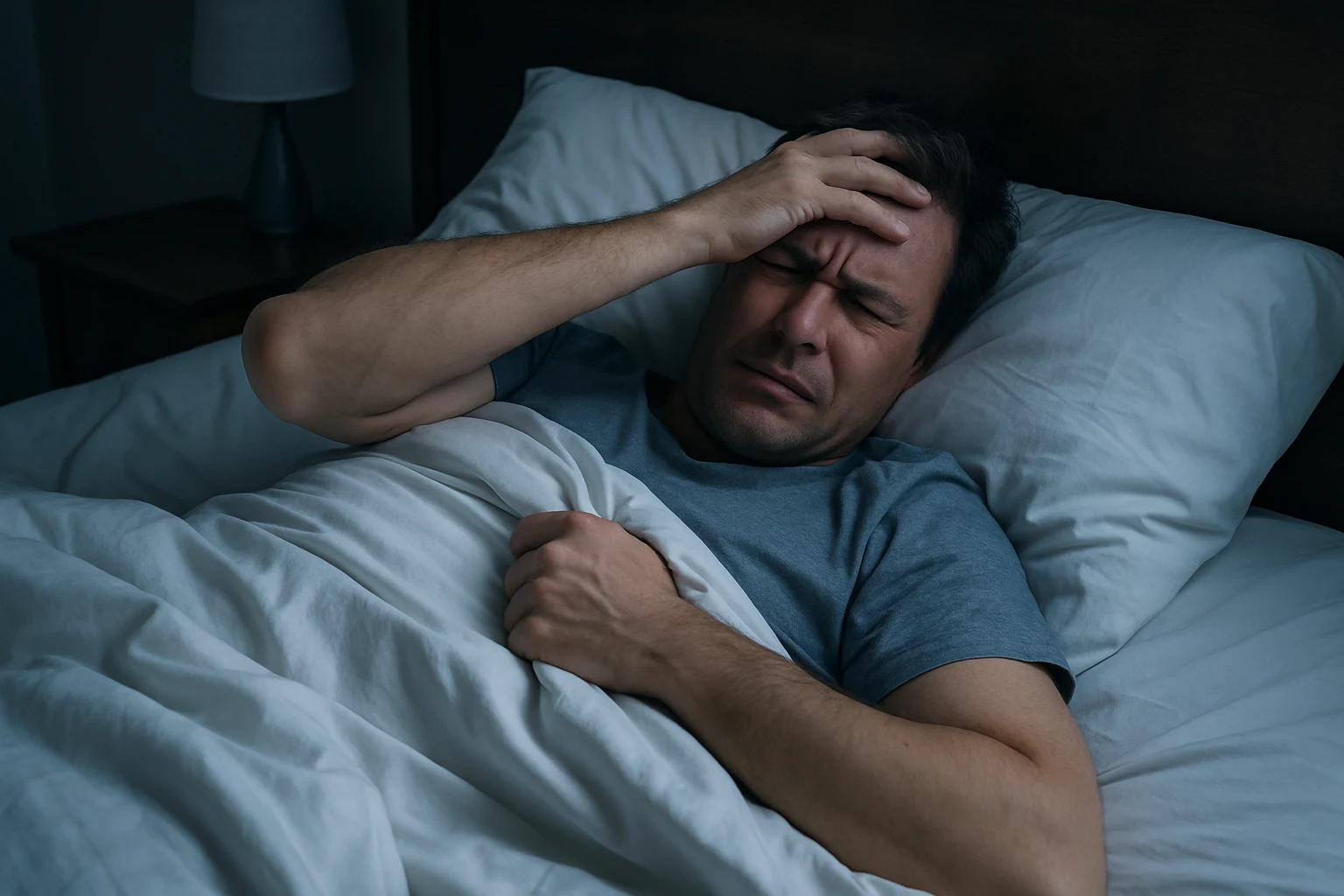
It’s one of the most alarming sleep experiences a person can have.
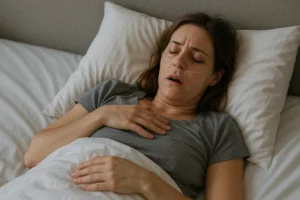
You’re asleep — or at least you think you are — and suddenly you jolt awake, heart pounding, desperately trying to catch your breath.
If you’ve ever experienced waking up gasping for air, you know how frightening it feels. Many people describe it as a panic attack. Others assume it’s stress. Some even ignore it entirely.
But here’s the truth: your body does not randomly struggle to breathe at night without a reason.
And when breathing is disrupted during sleep, it can affect far more than just your rest.
Let’s talk about what might really be happening — and why it matters.
Why Breathing Changes at Night
When you fall asleep, your body enters a more relaxed state. Muscles soften. Heart rate slows. Breathing becomes rhythmic and automatic.
But for some people, that relaxation leads to airway instability.
Instead of flowing smoothly, air may become partially or completely blocked for brief periods. These interruptions can cause shortness of breath during sleep, even if you don’t consciously remember every episode.
Sometimes you wake up suddenly.
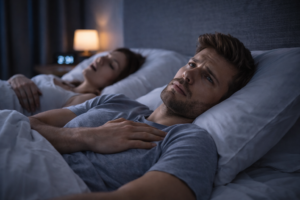
Sometimes your partner notices before you do.
Sometimes it happens dozens of times per night without full awareness.
Either way, your body experiences stress every time oxygen flow is disrupted.
The Hidden Strain on Your Heart and Brain
Here’s what most people don’t realize.
Each breathing pause can lead to subtle oxygen drops during sleep. Even if they last only seconds, repeated episodes trigger a survival response:
- Heart rate spikes
- Blood pressure rises
- Stress hormones release
- Brain activity increases abruptly
This cycle can repeat over and over again throughout the night.
Over time, untreated nighttime breathing disturbances are associated with:
- Hypertension
- Irregular heart rhythms
- Increased stroke risk
- Memory and concentration issues
- Mood changes
What feels like “just a scary wake-up” may actually be a chronic pattern placing strain on your cardiovascular and neurological systems.
It’s Not Just Snoring
Many people associate breathing problems at night only with loud snoring.
But sleep apnea breathing symptoms can show up in multiple ways:
- Gasping or choking awakenings
- Pauses in breathing noticed by a partner
- Restless, fragmented sleep
- Morning headaches
- Dry mouth upon waking
- Persistent daytime fatigue
Snoring may be present — but not always.
That’s why relying solely on noise as a warning sign can delay diagnosis.
When Nighttime Breathing Problems Become Dangerous
Occasional brief awakenings can happen to anyone. But consistent nighttime breathing problems are not normal.
Warning signs that deserve attention include:
- Episodes occurring multiple times per week
- Feeling unrefreshed despite adequate time in bed
- Sudden awakenings with racing heart
- Daytime sleepiness that affects safety
- High blood pressure that is difficult to control
If these symptoms sound familiar, your body may be repeatedly fighting for oxygen at night.
And that’s not something willpower can fix.
“Maybe It’s Just Anxiety…”
This is a common thought.
And yes — anxiety can cause nighttime awakenings.
But here’s the important distinction:
Anxiety-related awakenings usually happen after conscious stress buildup. Breathing-disordered awakenings are triggered by airway obstruction first — panic follows as a reaction.
In other words, the breathing event often causes the fear, not the other way around.
That’s why proper evaluation matters. Guessing doesn’t provide clarity.
The Role of a Sleep Study
If breathing disruption is suspected, a diagnostic evaluation may be recommended. A sleep study for breathing issues allows specialists to monitor:
- Airflow
- Oxygen levels
- Brain activity
- Heart rhythm
- Muscle movement
This testing identifies whether episodes are mild, moderate, or severe — and guides personalized treatment.
Many patients feel relieved after testing. Not because something is “wrong,” but because they finally understand what’s happening.
Answers replace uncertainty.
Treatment Can Be Life-Changing
When nighttime breathing disorders are diagnosed, treatment options are highly effective.
Depending on the cause, solutions may include:
- CPAP therapy
- Oral appliance therapy
- Positional therapy
- Weight management strategies
- Surgical consultation in select cases
Patients often report:
- Deeper, uninterrupted sleep
- Improved energy
- Better blood pressure control
- Sharper thinking
- Reduced anxiety around bedtime
Most importantly, the frightening awakenings stop.
Why Early Evaluation Matters
The body is incredibly resilient — but chronic oxygen disruption adds up over time.
Addressing breathing disturbances early can:
- Reduce long-term cardiovascular strain
- Protect cognitive function
- Improve metabolic health
- Enhance emotional regulation
- Restore confidence in sleep
Sleep should feel restorative, not threatening.
If you’re afraid to fall asleep because you’re worried about another gasping episode, that’s your sign to seek answers.
You Don’t Have to Normalize It
Too many people dismiss nighttime symptoms because they “only last a few seconds.”
But repeated stress responses night after night can have lasting consequences.
Healthy sleep is steady. Quiet. Consistent.
It does not involve struggling for breath.
And if your body is sounding the alarm, listening early makes all the difference.
At SONNO Sleep Center, the goal isn’t just to treat symptoms — it’s to protect your long-term health while restoring peaceful, uninterrupted rest.
- Causes of waking up gasping for air
- How shortness of breath during sleep affects the heart
- Identifying nighttime breathing problems early
- Warning signs of sleep apnea breathing symptoms
- Understanding oxygen drops during sleep and long-term risk
- When to schedule a sleep study for breathing issues
Conclusion
Sudden nighttime awakenings with difficulty breathing can feel terrifying, but they are also important warning signs. Identifying and treating the underlying cause protects not only your sleep quality but also your cardiovascular and neurological health. If your nights are interrupted by breathlessness, seeking evaluation can transform fear into clarity — and restore the calm, restorative sleep your body was designed to have.