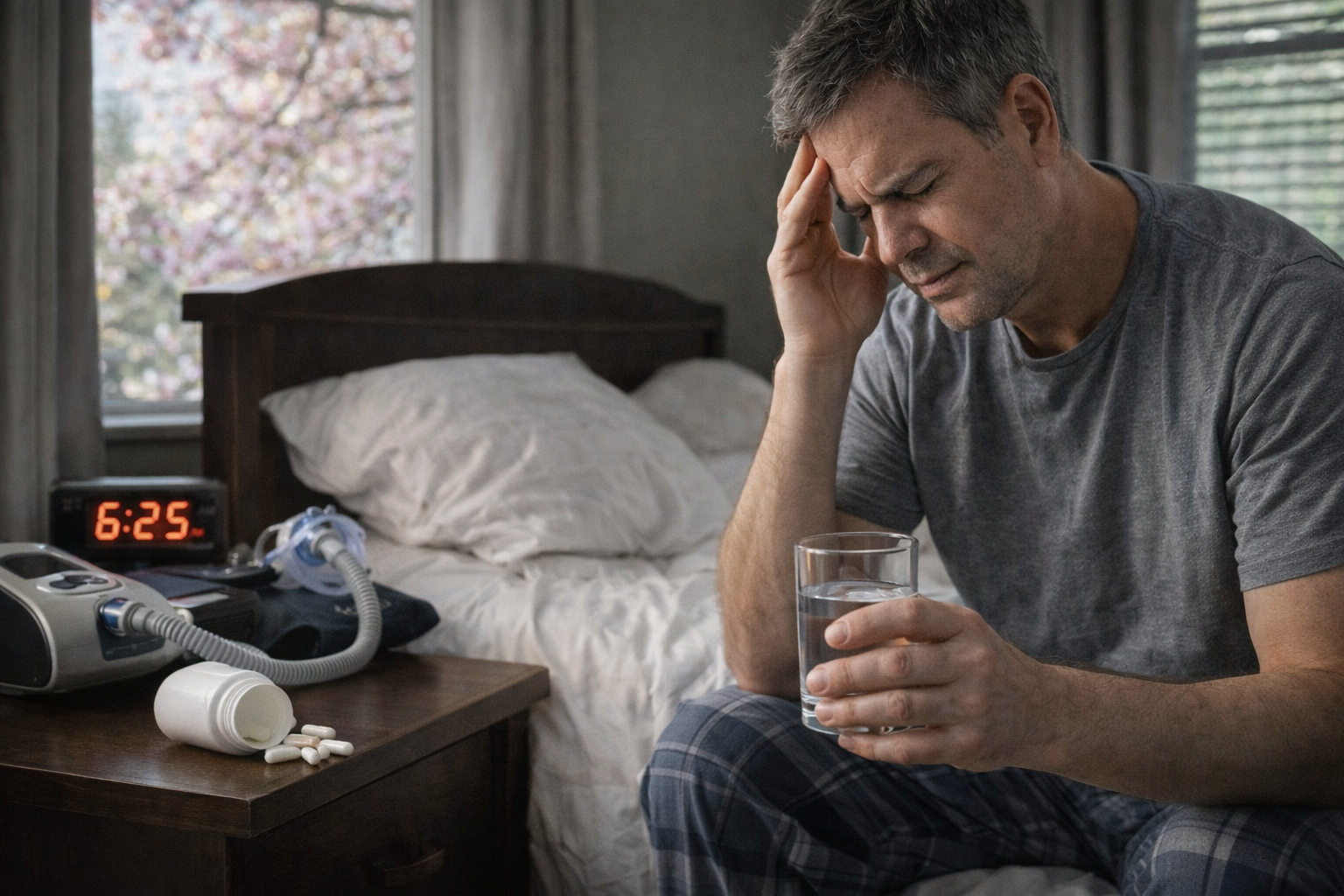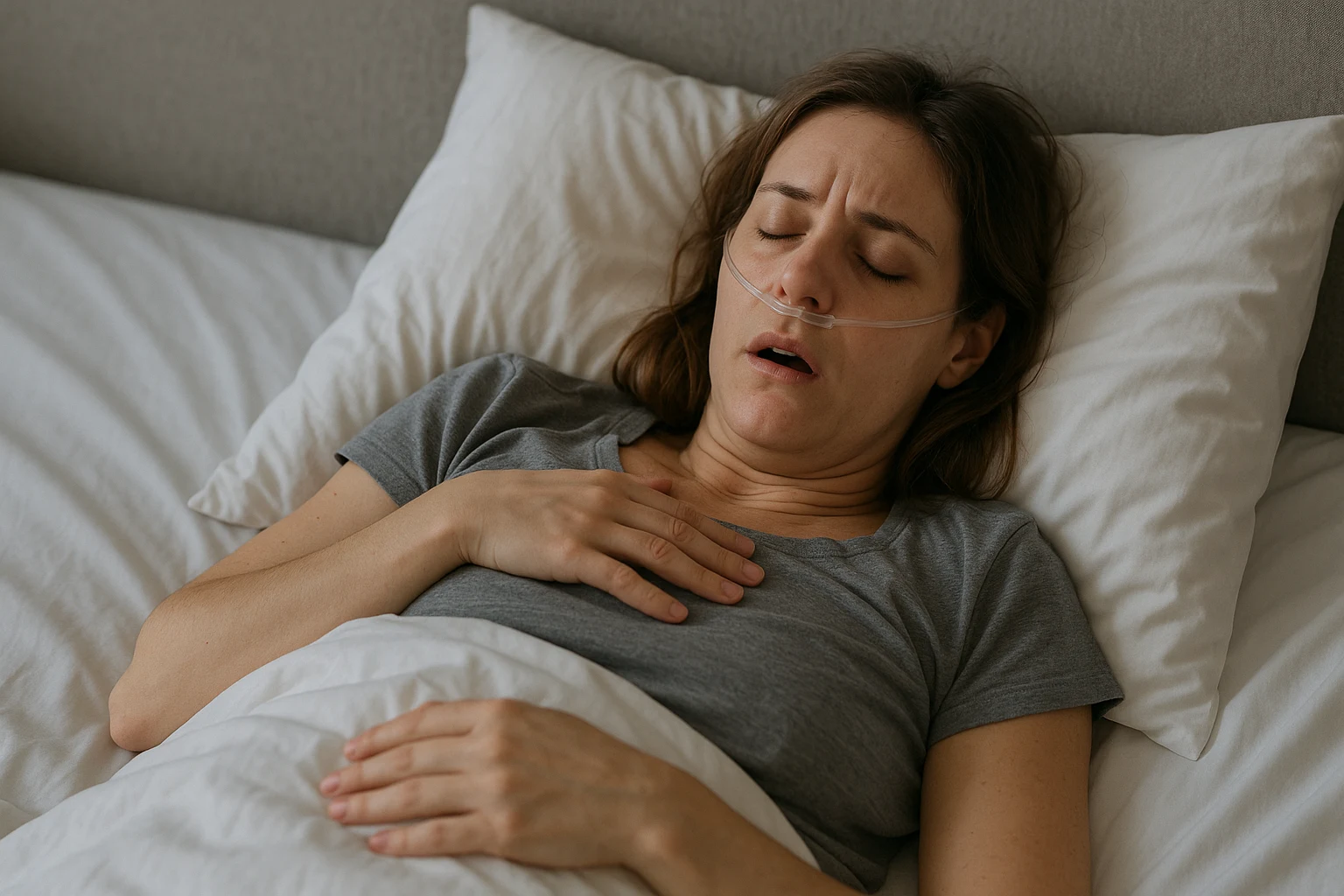
Morning Headaches Every Spring Morning? ...
Waking up in the spring with a pounding head can feel incredibly frustrating. You go to bed hoping to feel ...

Dr. Maria Macías will be the medical provider attending to the medical needs of our patients in El Paso. Each of our Centers is fully accredited by the American Academy of Sleep Medicine assuring you of the highest standards of excellence in care.
In addition, all of our physicians are board certified in sleep disorders medicine so that you will be treated and followed by knowledgeable, caring staff.
From your first consultation to your results, we guide you every step of the way.

Focused exclusively on diagnosing and treating sleep disorders.
A quiet, home-like environment for overnight studies.
Accurate monitoring and precise diagnostic equipment.
Clear reports and treatment plans without long waits.
Flexible appointments that fit your routine.
Friendly staff supporting you every step of the process.
Get personalized recommendations to improve your sleep health and address symptoms affecting your rest and daytime quality of life.
Here are the most frequently asked questions patients have
Sleep is an important part of our ability to function well during the day. Without adequate sleep at night, we feel sleepy and lethargic during the day, and as a result performing everyday tasks at home and at work may become difficulty. There is also now evidence that lack of quality sleep can affect our mental and physical health in a negative manner. Your doctor has determined that you have symptoms which may suggest a sleep disorder, and in order to evaluate these symptoms, a sleep study has been ordered to evaluate these symptoms during the time you are asleep. The goal is to determine the causes of your symptoms, improve your sleep quality, and improve your quality of life.
Your first visit is an office visit. During this one hour appointment, the sleep specialist will review the history of your sleep problem with you and your spouse/significant other. If a nighttime sleep study is determined to be of potential help in determining the cause of your sleep problem, your sleep physician will explain the procedures and what you can expect. Before you leave, we can schedule this nighttime appointment as well as follow-up appointments to discuss the results.
If you have been diagnosed with obstructive sleep apnea (stopping breathing during sleep), it is likely that your doctor has ordered continuous positive airway pressure (CPAP) as a treatment for this problem. During CPAP treatment, a comfortable, flexible mask is worn over the nose and pressurized air is delivered from a bedside machine through a hose and into the mask. This pressurized air stimulates the throat to stay open so that you can breathe. A second study is ordered so that the pressure of air necessary to eliminate your episodes of stopping breathing can be adjusted to eliminate these events. In some cases, these two studies can be combined into one night called a “split night” study.
We can evaluate patients as young as five years of age. There is no upper limit in age as long as the patient is ambulatory or has a caregiver stay to assist during the night.
Since each patient has an individual bedroom assigned for an evaluation, it is important that we know who is coming in at night for their evaluation. We request that you confirm for us no later than 12 noon on the day of your study that you will be reporting for your study that night. If we do not hear from you or if we are unable to contact you, your room will be assigned to another patient.
• Two piece pajamas/sleepwear and a robe
• Personal hygiene items
• Your own pillow (Optional)
• Prescription and over-the-counter medications
• Oxygen prescribed by your physician if required (Oxygen tanks are available for your use here)
• Noncaffeine containing snacks and drinks (Optional)
• Hand towels and washcloths
• Reading materials
• Do not eat a very heavy dinner. A light dinner at your usual time is suggested. • Do not drink caffeine containing beverages after 4 PM. • Do not use lotions or gels on your face or skin before coming in • Do not use gels, hairsprays, or other products on your hair before coming in. Wash your hair prior to your study. Do not wear wigs, weaves, or braids on the night of the study • Do not alter your medications unless you have been instructed to do so by your doctor. • Do not use your cell phone during the night for talking or texting. Turn off your cell phone when the study begins.
There are two different types of daytime sleep studies, the multiple sleep latency test (MSLT) and the maintenance of wakefulness test (MWT). The MSLT consists of four or five nap opportunities, depending upon the results of the test, which occur throughout the day. The purpose of the MSLT is to determine how sleepy you are by examining your brain activity. The MWT also consists of four daytime tests, but the purpose of the MWT is to determine how well someone is able to stay awake. There is always a night of sleep testing performed prior to the daytime MSLT, but the MWT may be performed without this previous night of testing. The MSLT may be ordered when a patient is extremely sleepy during the day without any known cause or when there is a suspicion of narcolepsy, a disorder of excessive daytime sleepiness. It is well known that persons with narcolepsy have specific patterns of sleep during the MSLT. The MWT is performed to determine how well someone is able to stay awake during the day.
If you have decided to schedule an appointment with us, you can have your primary doctor refer you, or you may call us yourself if your insurance company does not require a referral.